
Insights
Dec 1, 2026
AI is the future.
At least, that’s the story.
From the invention of the wheel to questions about humanity's future, OpenAI and Anthropic are using advertising to connect their technologies to the larger story of human progress. What are these films asking people to believe, and where do their products fit in?
Published:
Dec 1, 2026
Share:
Copy link
Copied!
While each image appeared then faded to black, disembodied voices asked, “Can AI be trusted? Who decides where its limits should be? Who hits the brakes if something goes wrong?”
It looked like a warning about AI. It was, in fact, an advertisement for Anthropic, one of the companies at the frontier of developing AI.
Halfway through, the tone shifted. The questions began to ask what AI might make possible. The film ended with a message: “There’s hope in hard questions.”
Looking at how other AI companies were introducing themselves to the world, I realized that Anthropic wasn’t the only one trying to tell a story that went far beyond what its product could do.
OpenAI’s 2025 Super Bowl commercial, “The Intelligence Age,” compressed centuries of human invention into a minute-long animation. Fire, the wheel, agriculture, the steam engine, the light bulb, flight, space exploration, and computing. And finally, ChatGPT.
One company began with humanity’s questions about the future. The other traced humanity’s achievements from the past. And both placed AI within a much larger story about human progress.
So what does it mean to advertise that technology as the next chapter in human progress?
“The danger comes when the category story gets too far ahead of what the product can actually deliver. Then you create enormous expectations that the customer experience cannot fulfill.”
Jim Lecinski
Professor of Marketing, Kellogg School of Management
Selling the idea before the product
Jeff Beer has spent nearly two decades covering advertising, including Advertising Age to Fast Company.
He sees two underlying messages in AI companies’ advertising. First, they want people to see the technology as “safe, innovative, and helpful,” he said. Then comes the second message: “We’re the best option, the best tool for you…to experience this yourself.”
“Early companies often have to answer two questions at once: ‘Why should I care about this new category?’ and ‘Why should I choose your product?’” Lecinski said.
In OpenAI’s commercial, black and white dots form the inventions that lead up to ChatGPT. The dots are also a connection to the product itself.
“When you ask ChatGPT a question, the dot comes up,” OpenAI’s then chief marketing officer, Kate Rouch, told Beer in February 2025. She explained that the dot also appeared across other OpenAI products as part of its refreshed brand design. So, the animation connects something familiar to existing users with a much broader history of invention.
Asked why ChatGPT appears last, OpenAI explained: “Ending with ChatGPT brings that story into the present and the viewer’s own life.” The company said it wanted viewers to feel invited to explore what AI could make possible for them.
The film makes that connection without demonstrating a particular ChatGPT task or comparing the product with any competing AI systems. ChatGPT’s place in the sequence is itself the message.
In a paper published in the proceedings of the 2026 ACM International Conference on Interactive Media Experiences, “Unveiling Hype Patterns in AI Advertising,” researchers Yue Zhu, Yuan Yao and Maria Luce Lupetti analyzed 53 company-released promotional videos published between August 2022 and July 2024. They identified a pattern they called “Prophesy AI” in 16 videos: presenting AI as the driver of a revolutionary future, sometimes through comparisons with major changes in human history. Their examples included a Perplexity film. OpenAI’s later commercial was outside the study’s scope.
Anthropic begins with people’s questions about employment, human relationships, healthcare and education. Its name appears as the company inviting people to keep questioning.
In its July 2026 announcement, the company said it had gathered input through a survey of 52,000 Americans, interviews with 81,000 Claude users across 159 countries, and in-person discussions with members of the public. They also invited people to submit further questions and said it would publicly report the actions it takes in response.
“They’re not just creating advertising in a vacuum,” Beer told me. “They’re acknowledging the cultural context in which they’re putting a message out into the world.”
By starting with anxiety, he explained, Anthropic was saying: “We’re acknowledging the situation, and then we’re making our case for optimism.”
Both campaigns connect a commercial technology to something larger than a specific product. They gave audiences different roles. One, where the audience were potential participants in technological progress and the other where the audience’s questions and concerns had a place in shaping its future.
A familiar story from Silicon Valley
In 1997, Apple was trying to rebuild itself. Steve Jobs had returned to the company he co-founded and its financial position was precarious. The business was yet to introduce the products that would eventually define its turnaround.
That September, Apple launched “Think Different.”
The commercial showed black and white footage of Albert Einstein, Martin Luther King Jr., Amelia Earhart, Muhammad Ali and other figures who had challenged convention.
No computers were shown, but the campaign associated Apple with people who had changed the world through their ideas.
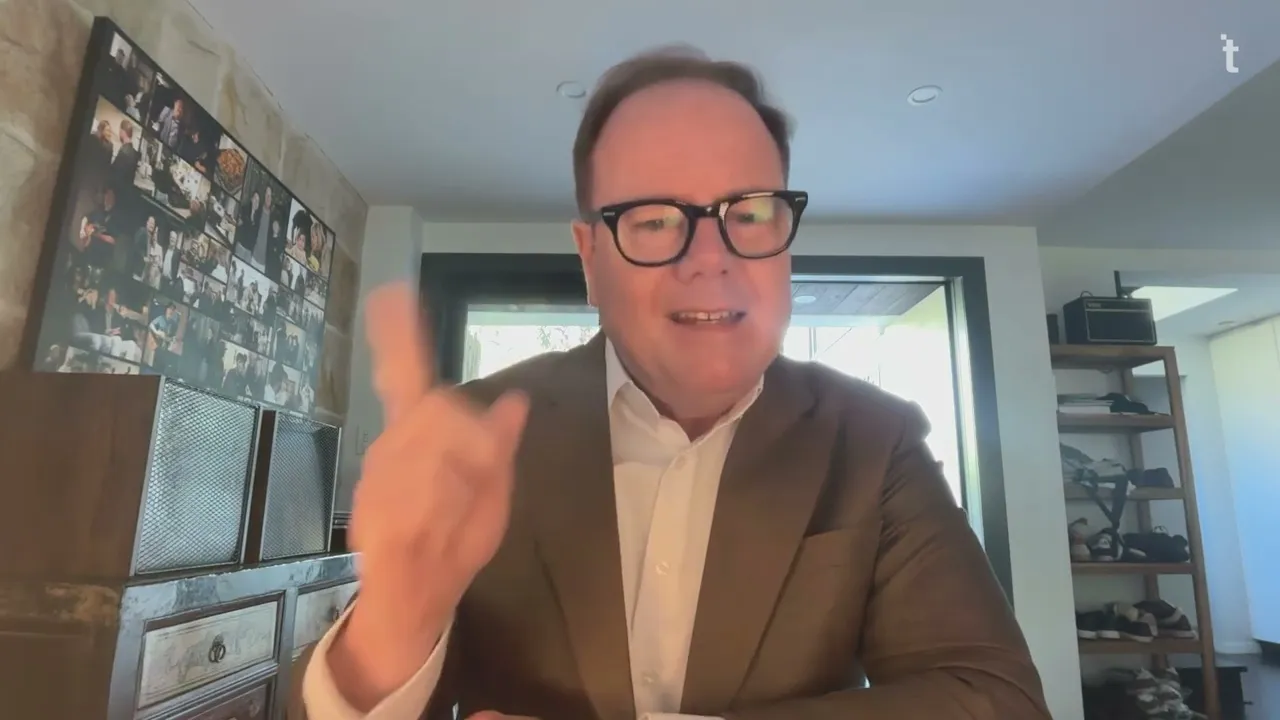
Cameron Craig, who worked in Apple’s communications team for a decade during the Steve Jobs era, immediately recognized the comparison when I showed him Anthropic’s “There’s Hope in Hard Questions.”
He recalled Steve Jobs showing the advertisement to about 20 of his top engineers at his home in Palo Alto before it aired.
“They left his house believing,” Craig said. “That’s the power of Think Different before it had even left the company.”
The following years brought the iMac, iPod and eventually the iPhone.
“So it’s not just about an ad, it’s about how you deliver on that promise.”
Cameron Craig
Former Apple Communications Executive
By contrast, Craig said, the ads for AI companies are “a bit lacking in that human benefit, that warm kind of tone,” Craig said of the AI films.
Beer pointed to Google’s Parisian Love as an example of an emotional story built around the product itself. “It both tells the story and shows how people use the product,” he said.
In the 2010 commercial, a succession of Google searches follow someone studying abroad in Paris, from learning French and finding a café to falling in love and starting a family. There are no actors on screen. The entire story is seen through a search bar.

“Think Different” associated Apple with creativity and innovation in viewers’ minds. “Parisian Love” made Google Search relatable through a human story. In the ads for OpenAI and Anthropic, the subject expands to humanity’s collective past and future, and the place AI might occupy in society.
An ad doesn’t arrive alone
“Someone can be using ChatGPT or Claude for little daily tasks and still not want a data center in their town or be concerned about job losses caused by AI or are just generally terrified at how these models are breaking out and getting into other systems,” Beer pointed out. “I can’t think of another industry where that’s the case in such a big way.”
“Our impression of them is informed every day in the headlines,” he said. “It's almost like putting the toothpaste back in the tube.”
“It’s almost like putting the toothpaste back in the tube.” he said.
Dennis Nguyen, an assistant professor of Digital Literacy and Digital Methods at Utrecht University, studies how media narratives shape public understanding of emerging technologies.
“The bolder the claim, the more likely it is that it’s being put on the news agenda,” Nguyen said.
The word such as “breakthrough,” he explained, suggests a sudden, fundamental advance, even when the underlying achievement might require verification. “News is not just a reflection of what’s happening, it also shapes what’s happening.”
Frank Dias, who has worked in communications for nearly two decades and now explored AI adoption, was skeptical of the optimistic message in Anthropic’s “There’s Hope in Hard Questions.” “For me it’s all about action,” he said. “That’s what proves it more than words.”
Anthropic’s announcement points to investments in safeguards, research into AI model behavior and support for scientific and nonprofit work as part of its public benefit mission.
Craig who also worked in communications at PayPal emphasized listening. “In order to gain trust, you need to step out of show business for a little while and become human,” Craig said. “You need to listen to people.”
Alongside their sweeping visions, AI companies have also told stories about what their products can do in everyday life.
From changing the world to making dinner
In September 2025, OpenAI introduced a campaign that looked considerably different from its Super Bowl debut.
One commercial was about a young man preparing dinner for a date. He wanted a recipe that communicated romantic interest without trying too hard.
ChatGPT helped him find one. It was a lemon garlic pasta with cherry tomatoes.
There was no mention of any scientific discovery or the future of civilization. Just dinner.
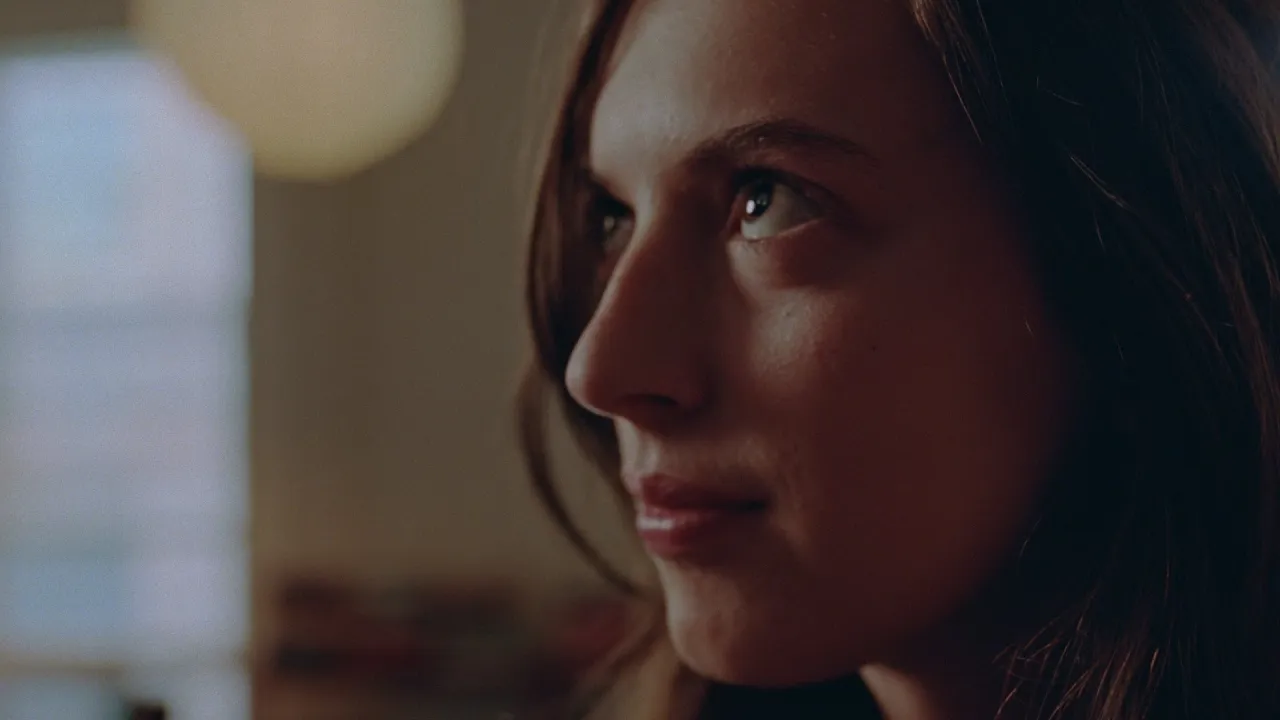
“They’ve basically gone from the big existential to sort of the smaller moments,” Beer said.
OpenAI described the campaigns as serving different purposes: “A larger film can spark curiosity about technological progress. An everyday ChatGPT story can make it personally relevant.” Its “Codex Originals” campaign takes a third approach, featuring entrepreneurs, researchers and creators who use the company's coding product. The projects include a platform that helps recover value from surplus inventory and a tool designed to help students find scholarships.
The work was developed by ALTO, an independent agency where Beer had recently joined as editorial director. He wasn’t involved in developing the campaign.
“You’re using the people actually building the things to explain and illustrate the technology,” he said.
OpenAI pointed to immunologist Derya Unutmaz as an example. It said, “He uses Codex to assemble large datasets on cancer mutations. His scientific expertise gives the work its purpose and guides its interpretation”. “Being specific about where Codex helps is essential to telling that story accurately,” the company said.
Zhu and her co-authors distinguish between explaining a tool’s capabilities and representing the experience of using it. They recommend making clear when demonstrations shorten a process, select an output from several attempts or involve additional human editing. It helps to show viewers what it took to get that result.
Their study also identifies a broader gap — even videos that explain a product’s functions can leave its societal implications unaddressed. Questions about labor displacement, inequality and environmental costs were seldom discussed in their sample. Demonstrating a useful task does not settle those wider questions.
“With unfamiliar technology, awareness alone rarely does much,” Lecinski said. “People need to understand, very concretely, ‘What can this do for someone like me?’”
“Someone can hear 100 times that generative AI is transformative, but five minutes actually using it to plan a trip, analyze a document, create an image or solve a work problem can change their perception much faster.”
OpenAI said it considers both perception and behavior when evaluating campaigns, including whether audiences better understand what its products can do. “Continued use is a longer-term measure of value, and the product experience has to earn that,” the company said.
Whether either OpenAI's or Anthropic's advertisements changed viewers' understanding, trust or behavior remains an open question. Their campaigns invite audiences to imagine AI's place in humanity's future, but that invitation is different from what happens when someone actually uses the technology.
As Lecinski put it, “A campaign could generate millions of first-time users and still fail commercially if people try the product once because they are curious and never return.”
“Adoption is different from trial.”